

My BioHealth · Learn · Campbellfield
Male and Female Pattern Hair Loss Explained
Understand the pattern before choosing a treatment.
What is androgenetic alopecia?
Androgenetic alopecia is commonly called male or female pattern hair loss. Genetic susceptibility can play a part, and changes often develop gradually. Having a family history is useful information to bring to an assessment.
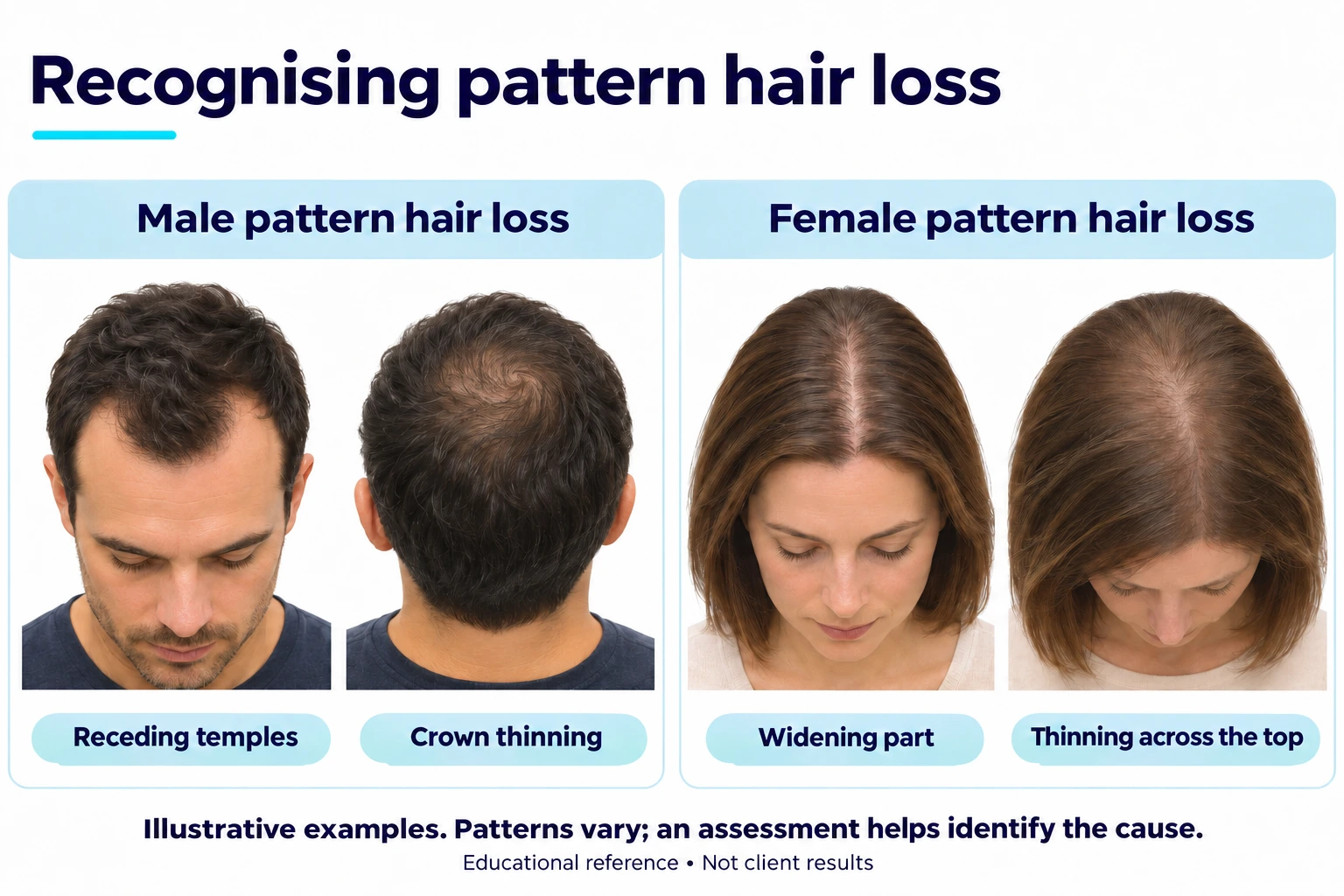
Male pattern hair loss: hairline and crown changes
People may notice recession around the temples or reduced density at the crown. The pattern and stage of change help guide the discussion; a photograph alone does not establish the cause or the right treatment.
Female pattern hair loss: a widening part and reduced fullness
A wider part or reduced fullness across the top of the scalp can prompt an assessment. Your history, scalp findings and any increased shedding matter when considering the next step.
Alopecia is not one diagnosis
Alopecia areata can cause patches of loss. Traction-related loss involves repeated tension. Telogen effluvium involves increased shedding and may follow a trigger. These are different from hereditary pattern loss and need different assessment and treatment decisions.
Where PRP and PRF fit in the conversation
PRP and PRF are platelet-based options to discuss after the cause and suitability have been considered. They are not a universal treatment for every type of alopecia. Other treatment choices, including medicines prescribed by a doctor, may also be relevant.
At My BioHealth in Campbellfield, we explain your available platelet treatment options, current prices and how a plan would be reviewed. The consultation does not commit you to treatment.
Explore PRP and PRF hair loss treatments for men and women · Compare ACP and ACP MAX options
What to bring to your consultation
Note when the change began, where you notice it, family history, current treatments and any recent health changes. Bring earlier photographs if you have them. Sudden or patchy loss, scalp pain or inflammation should be discussed with a medical practitioner.
Further reading
Australian Prescriber: Male and female pattern hair loss. This guide explains terminology and options; it does not diagnose your hair loss.