
Eyebrow Tattoo Removal in Campbellfield
For unwanted microblading, powder brows and cosmetic eyebrow pigment. Nurse-led assessment, honest expectations and a test patch before treatment. Available to female clients only.
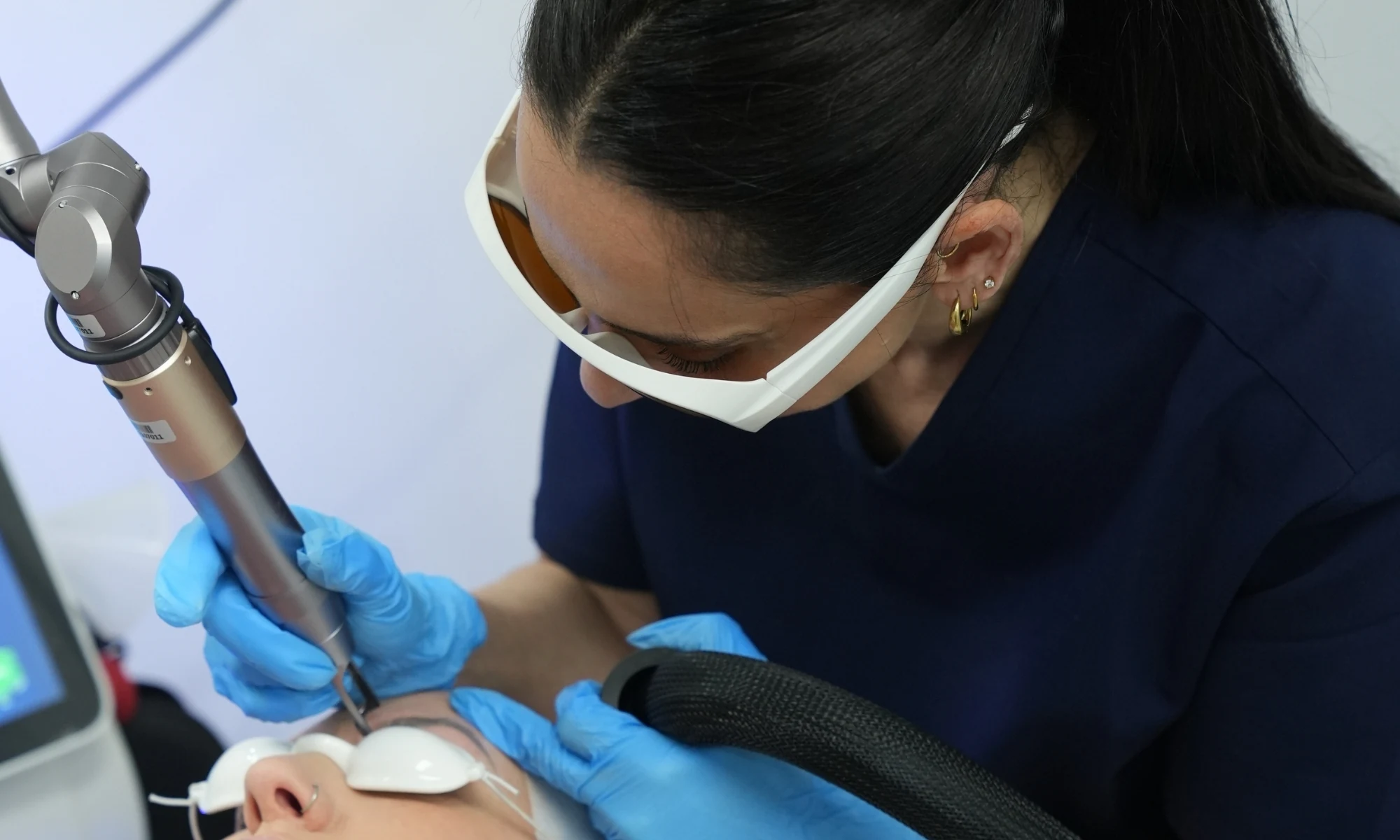
Ready to change your brows?
Cosmetic brow pigment can fade unevenly, change colour or simply stop feeling like you. We assess microblading, powder brows and other cosmetic eyebrow tattoos individually, including the possibility of temporary darkening or colour shifts before planning treatment.
Maybe it's time
A name that doesn't belong anymore. A design you got at nineteen that doesn't feel like you at thirty-five. Something rushed, something regretted, something that was right for a different chapter of your life. Or maybe it's simpler than that, you just want clear skin back, no story attached.
Whatever the reason, if you've been quietly looking into tattoo removal for a while, reading, wondering, maybe even talking yourself out of it a few times, this is written for that exact moment.
How laser tattoo removal actually works
Tattoo ink sits in your skin as particles too large for your body to clear away on its own. A tattoo removal laser works by delivering short, high-energy pulses of light that shatter that ink into much smaller fragments, small enough that your own immune system can gradually break them down and flush them out naturally over the weeks following each session.
This is why removal happens in a series of sessions with real gaps in between, not in one visit: your body needs time to clear each round of shattered ink before the next session goes to work on what's left.
What affects how many sessions you'll need
No two tattoos remove at exactly the same rate, but a few genuine factors matter:
- Ink colour — black and dark blue respond fastest; greens, yellows and light pastels are more stubborn and need a specialised approach
- Ink density — a solid, heavily-shaded tattoo generally takes longer than fine linework
- Age of the tattoo — older tattoos have often already faded somewhat, which can work in your favour
- Skin tone and location on the body — these affect how the laser settings are chosen for your safety and comfort
- Whether it was done professionally or is a home/stick-and-poke tattoo — ink depth and consistency vary considerably
We'll assess your specific tattoo in person and give you an honest, individual estimate rather than a generic number, because a small, simple, single-colour design and a large, dense, multi-colour piece are genuinely different jobs.
Who this is for
- You have a tattoo you no longer want, in any amount, full removal or meaningful fading
- You're preparing to cover an old tattoo with new work, and need it faded enough for the new design to sit cleanly
- You have a small, specific tattoo (like initials, a small symbol, or cosmetic brow pigment) you’d like reduced or removed. Results vary and complete removal cannot be assured
- You want an honest, size-based price before you commit, not a vague "it depends" with no number attached
What a session actually feels like
We use advanced ice cooling, set to around -40°C, throughout your treatment. It numbs the skin in real time, takes the edge off the laser sensation, and helps protect the surrounding skin from heat. Most people still describe the feeling as similar to a rubber band snapping against the skin, but the cooling makes a genuine difference. Most sessions themselves only take a few minutes of actual laser time, even though your appointment will run longer once you include preparation and aftercare.
On the day, the area is cleaned and marked, you'll be given protective eyewear, and the cooling system is applied before the laser begins. Nothing here is rushed.
What to expect, session by session
Session one starts with a proper consultation, not just a test patch. Your nurse will examine your tattoo, talk through your medical history, and understand your goals (full removal vs. fading for a cover-up) before anything is decided. From there we build a personalised plan around your tattoo's size, colour, age, location and your skin type, and confirm a realistic sense of the number of sessions likely involved.
Sessions are spaced 6 to 8 weeks apart, giving your body time to do its own work clearing the shattered ink between visits. Turning up more frequently than recommended doesn't speed up the process, it just increases risk to the skin without giving your body time to catch up.
Most tattoos need 6 to 10 or more sessions depending on ink density, colour and depth. Ask about our 3 Session Pack, which includes 15% off compared to booking sessions individually.
Healing, day by day
What happens after your session matters just as much as the session itself. Here's honestly what to expect:
- Day 0 — The treated area may be red, swollen and slightly raised straight after your session. A cool compress wrapped in a clean cloth can help ease discomfort. Avoid direct heat, tight clothing, and anything that might irritate the area.
- Day 1–3 — Redness and swelling usually start to calm down, though the skin may still feel tender or tight. Small blisters, scabbing or a frosted appearance can sometimes develop as part of normal healing. Keep the area clean, follow your nurse's product recommendations, and avoid hot showers, saunas, swimming, heavy exercise and soaking the area.
- Day 4–7 — The skin should settle further, and any blisters or scabs may start to dry and flake naturally. Don't pick, scratch or peel the skin, this increases the risk of scarring or infection.
- Week 2 and beyond — The area continues to heal, and the ink may begin to appear lighter or faded. Temporary skin colour changes (pinkness, lightening or darkening) can occur while it recovers. Once fully healed, sunscreen on exposed skin helps protect against pigmentation changes and supports the best possible result.
Why choose a nurse-led clinic for this
Tattoo removal is a medical procedure using medical-grade laser technology on your skin, not a beauty treatment. We follow conservative protocols designed to help minimise risks like scarring, pigmentation changes or blistering. Being assessed and treated by a nurse means your skin type, any medications, and any relevant health history are properly considered before you're treated, and any concerns during your removal journey are handled by someone with real clinical training.
Common questions
Most people find it uncomfortable rather than unbearably painful, often compared to a rubber band snap. A cooling device is used throughout, and we'll always work at a pace that's right for you.
It genuinely depends on your specific tattoo, colour, density, age, and location all play a role. We'll give you an honest, individual estimate at your first visit rather than a generic promise, because a same-day guess without seeing your tattoo isn't a real answer.
Black and dark ink typically respond fastest. Lighter colours like yellow, white and pastel shades are more resistant and may need a different approach or additional sessions, we'll be upfront with you about this from the start.
For many people, laser removal achieves significant fading or full clearance over a course of sessions, but we can't guarantee a specific outcome for any individual tattoo, since results depend on the factors above and vary person to person. What we can commit to is an honest assessment and no false promises.
Laser settings are adjusted based on your individual skin type for safety and comfort, this is part of why an in-person assessment matters more than an online price guess.
It can mean fewer sessions than full removal, since cover-up work generally only needs enough fading for the new design to read clearly over the old one. Let us know this is your goal at your first visit so we can plan accordingly.
It's suitable for most people with unwanted or faded ink, but skin type, medical history, current medications, and the tattoo's age, colour and location can all affect whether and how treatment proceeds. This is exactly why we start with a real consultation rather than treating on the spot, so we can make sure it's genuinely right for you first.
A test patch lets us see how your specific skin and ink respond to the laser before committing to a full treatment plan. It's a genuine safety step, not an extra hurdle designed to sell you more sessions.
Real gaps between sessions are essential, your body needs time to clear each round of shattered ink before the next session goes to work on what's left. Your practitioner will confirm the right spacing for your specific tattoo.
Black and dark blue ink respond fastest to laser treatment. Greens, yellows and light pastels are more stubborn and typically need a specialised approach and more sessions.
Generally yes, ink density is one of the genuine factors that affects your timeline. A solid, heavily-shaded tattoo commonly takes more sessions than fine linework of a similar size.
Priced by size, not by guesswork, after an honest in-person assessment. This means your quote reflects your actual tattoo, not a generic package that may not match what you need.
Your practitioner will walk you through specific aftercare after each session, covering how to care for the treated area while your body clears the shattered ink naturally over the following weeks.
Yes, we're a short drive from all three, plus Coolaroo and Roxburgh Park. Since tattoo removal involves multiple sessions over time, some local clients appreciate not having to travel into the city for each one.
What people commonly explore it for
- An honest assessment before you commit to a course
- Pricing by size, explained upfront
- A test patch first, so you know how your skin responds
These are reasons people book. Sessions needed vary considerably and no specific result can be guaranteed.
Preparing for your session
- A test patch is required before your first full session.
- Avoid sun exposure and tanning for 4 weeks beforehand.
- Shave the treatment area before you arrive.
- Arrive with clean skin. No makeup, lotion or fake tan on the area.
- Hydrate well in the days beforehand.
Good to know
- This treatment is currently available to female clients only.
- A test patch is required before your first full session, without exception.
- Sessions are spaced 6 to 8 weeks apart to allow the skin to clear.
- A 3 Session Pack is available at 15% off.
Why My BioHealth
Pricing by size after an assessment, a test patch first, and a realistic estimate of how many sessions may be needed rather than a number that sounds good.
Safety and precautions
This service may not be suitable if:
- You are pregnant or breastfeeding.
- You take medication that increases light sensitivity.
- You have taken isotretinoin (Roaccutane) within the last 6 months.
- You have an active infection, sunburn or a recent tan in the treatment area.
- You have a tendency to keloid or hypertrophic scarring.
- You have skin cancer, melanoma or an undiagnosed lesion in the area.
- You have photosensitive epilepsy.
This suits clients wanting to fully remove an unwanted tattoo, lighten one before a cover up, or fade part of a design for a redesign. Because ink density, colour and depth vary so much between tattoos, every treatment plan is built individually after your test patch.
Can't find what you're looking for? Ask us directly and our team will get back to you.