

Knowledge · Wellness & Recovery
Understanding Hyperbaric Oxygen Therapy
Oxygen, recovery and healthy ageing—making sense of the research.
You may have heard about hyperbaric oxygen therapy for wound healing, sports recovery, better sleep or longevity. With so many claims online, understanding what has actually been studied can be difficult.
This guide explains how HBOT works, where it has established medical applications and what emerging research can—and cannot—tell us about wellness sessions.
My BioHealth offers seated, mild-pressure sessions at 1.35 ATA in Campbellfield, Melbourne’s north.
Looking for appointments? Explore HBOT Sessions.
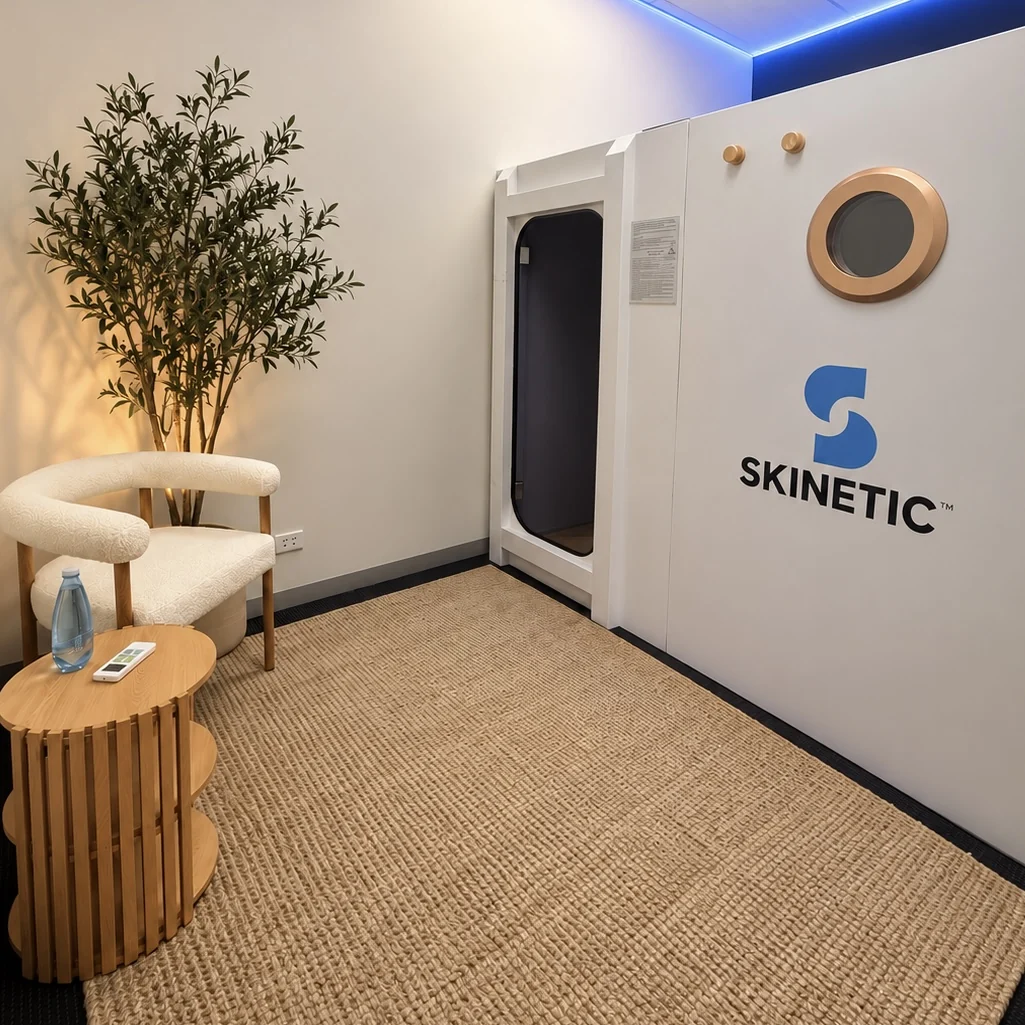
How does hyperbaric oxygen therapy work?
“Hyperbaric” means above normal atmospheric pressure. Pressure is measured in atmospheres absolute, or ATA. Normal sea-level atmospheric pressure is approximately 1 ATA; 1.35 ATA is approximately 35% higher.
Most oxygen in your blood travels attached to haemoglobin in red blood cells. A smaller amount dissolves in the liquid component, called plasma. Increasing the pressure of oxygen breathed can increase this dissolved oxygen.
This explains the basic mechanism. It does not, by itself, prove a particular benefit. The oxygen concentration, chamber pressure, session duration and number of appointments all influence the exposure. A pressure reading does not tell you the oxygen concentration being breathed.
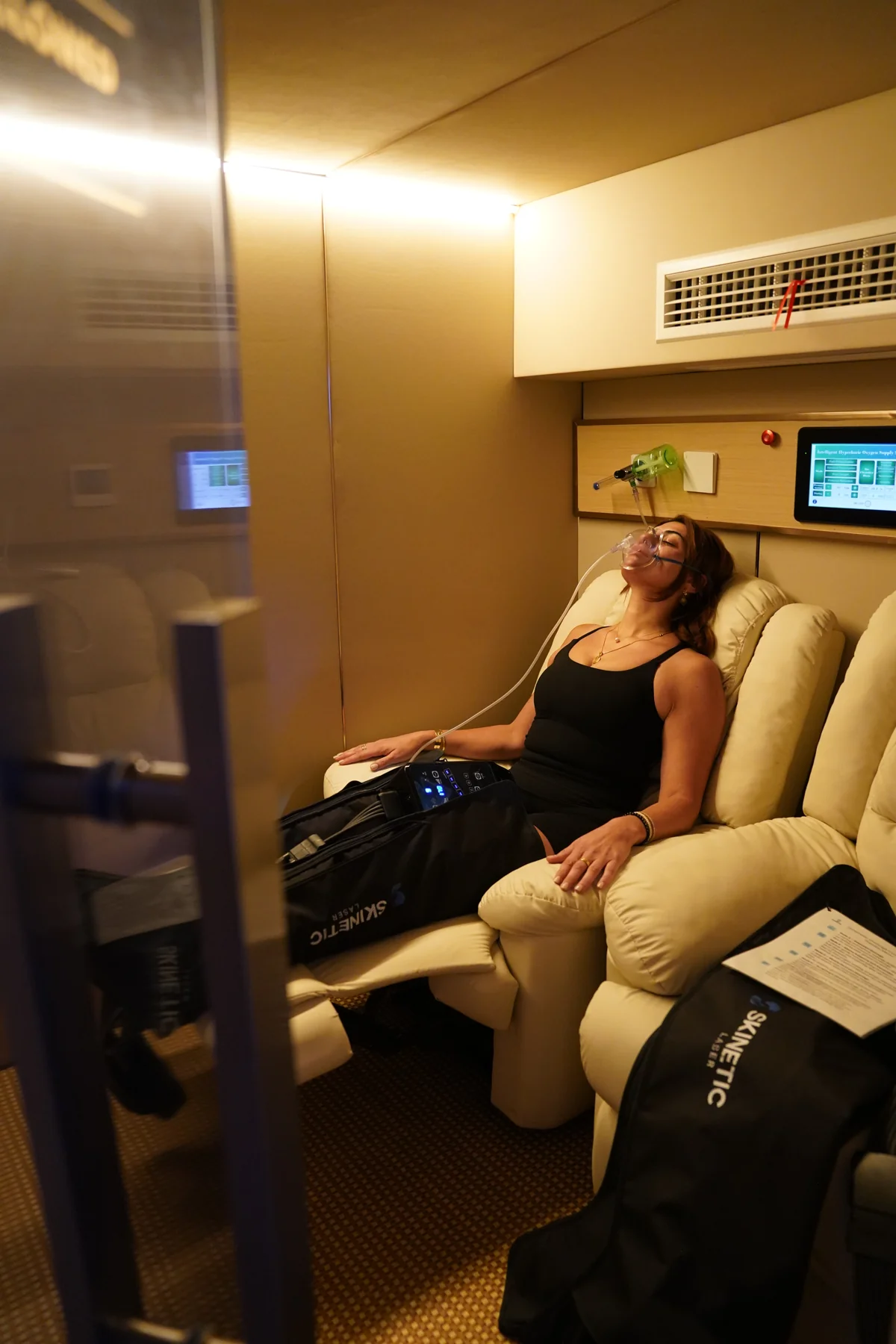
Why is oxygen important for recovery?
Your cells need oxygen to produce energy and maintain normal function. Healing tissues also depend on an adequate oxygen supply.
Medical HBOT uses controlled oxygen exposure for specific clinical purposes. Researchers are also investigating how different protocols affect exercise recovery, sleep, cognition and markers of ageing. These subjects are related, but the evidence is not equally strong for every use—or every chamber.
Wound healing and tissue repair
Wound healing is an established area of specialist hyperbaric medicine. In selected patients, medical teams use HBOT alongside other treatment for problem wounds, including some related to diabetes or radiation injury.
It does not replace wound assessment, infection management or standard care, and not every wound requires HBOT.
My BioHealth’s mild-pressure wellness service is not equivalent to a hospital wound-treatment programme. If a wound is not healing or you are concerned about recovery after surgery, seek advice from your treating clinician. View The Alfred’s medical HBOT information.
Exercise recovery and physical performance
HBOT has been studied in athletes and people recovering from exercise-related muscle injury. Researchers have measured fatigue, muscle soreness, performance and physiological markers.
The findings are mixed. A systematic review found no significant overall benefit for performance or recovery when HBOT was delivered before or after exercise. Individual studies using particular protocols have reported different findings.
This means oxygen therapy remains an area of investigation—not an assured shortcut to faster recovery, improved endurance or better fitness. View the exercise recovery review. Read a mild-pressure exercise study.
Sleep quality and sleep management
Restful sleep is central to wellbeing, which makes the relationship between HBOT and sleep an understandable area of interest.
A 2026 observational study reported improved sleep-quality scores among patients who completed a 60-session HBOT programme. However, observational findings cannot establish that HBOT caused the improvement, and the researchers called for controlled trials.
The study does not prove that occasional mild-pressure sessions treat insomnia or other sleep disorders. Persistent sleep difficulties, loud snoring or excessive daytime sleepiness deserve medical assessment. View the sleep-quality study.
Healthy ageing, anti-ageing and longevity
Some of the interest in HBOT comes from research into biological ageing.
A small study involving 35 adults aged 64 and older investigated telomeres—the protective ends of chromosomes—and markers of ageing in selected immune cells. Researchers reported changes after a course of 60 sessions using 100% oxygen at 2 ATA.
The study had no untreated control group, and the long-term significance of the changes remained uncertain. It did not demonstrate a longer lifespan, reversal of whole-body ageing or cosmetic rejuvenation.
These findings help explain interest in HBOT and longevity, but they cannot be transferred directly to our 1.35 ATA wellness sessions. View the cellular-ageing study.
Brain health, attention and mental clarity
Researchers have also explored cognition in healthy older adults. A randomised trial reported improvements in aspects of cognitive function following a structured HBOT course.
The findings apply to the people and protocol studied. They do not establish that a single wellness session improves focus, prevents dementia or treats neurological illness.
New memory difficulties, persistent brain fog or changes in neurological function should be assessed rather than managed through a wellness booking alone. View the cognitive-function trial.
What about inflammation and cellular repair?
Research into HBOT includes oxygen-sensitive signalling, blood-vessel formation and inflammatory responses. These mechanisms help scientists investigate why particular protocols may have particular effects.
However, a biological mechanism is not the same as a demonstrated benefit for every person. “Reduces inflammation” or “regenerates cells” is too broad without identifying the condition, protocol and evidence behind the claim.
Mild-pressure sessions versus medical treatment
Medical hyperbaric services and wellness chambers can differ in pressure, oxygen delivery, clinical supervision and treatment goals.
My BioHealth offers 1.35 ATA sessions with oxygen delivered through a mask. We do not describe these appointments as equivalent to the higher-pressure courses used in many clinical studies.
Before drawing a conclusion from a headline, ask whether the research involved people or animals; what pressure and oxygen concentration were used; how many sessions participants completed; whether there was a suitable comparison group; and whether researchers measured an outcome relevant to your goal.
A study can be interesting without proving that your appointment will deliver the same result.
HBOT before PRP or PRF
There is research interest in whether hyperbaric oxygen exposure before blood collection can influence platelet preparations. This should not be described as oxygen becoming “trapped” in plasma or as proof that a mild session makes PRP or PRF stronger.
If you are considering a combined appointment, ask our team about the rationale, suitability, timing and separate costs. It is not a guaranteed enhancement or a prerequisite for platelet treatment.
Explore our dedicated HBOT Before PRP & PRF guide for further discussion.
Safety and suitability
Hyperbaric sessions are not suitable for everyone. Pressure changes can affect the ears and sinuses; other risks depend on the equipment and oxygen exposure.
Medical HBOT can also cause temporary vision changes, oxygen toxicity and other complications. Vision changes should not be promoted as a benefit or assumed to resolve within minutes. Oxygen use also requires strict fire-safety precautions. Read about vision changes. Read equipment safety guidance.
Tell our team about your medical history, medicines, implanted devices, pregnancy, recent surgery, ear or sinus problems and concerns about enclosed spaces. An untreated collapsed lung is a reason not to enter the chamber.
Screening takes place before your first session. Medical clearance may be required.
Common questions
Does 1.35 ATA mean 35% more oxygen?
No. It describes atmospheric pressure, not the oxygen concentration breathed or a measured increase in your blood oxygen.
Can HBOT prevent disease or reverse ageing?
Those broad claims are not established for our wellness sessions. Research into selected ageing markers is not proof of disease prevention or longer life.
How many sessions will I need?
There is no universal answer. Research courses vary considerably and should not be treated as a personal prescription. Discuss your goals and suitability with the team.
Explore HBOT at My BioHealth
If you would like to understand the chamber experience, visit our service page for current session options, pricing, preparation and booking.
Explore HBOT Sessions · Contact Our Campbellfield Clinic
This article provides general information, not individual medical advice. Evidence varies by condition and treatment protocol. Our mild-pressure sessions do not replace diagnosis, prescribed treatment or specialist hyperbaric care.