

Campbellfield · Melbourne’s north · Nurse-led clinic
Hyperbaric Oxygen Therapy in Campbellfield
Your recovery goal first. A clear conversation about oxygen therapy next.
Looking for a recovery routine that fits around training, work or a demanding week? Explore mild Hyperbaric Oxygen Therapy at My BioHealth in Campbellfield with your goals at the centre. Our team explains the seated chamber experience, screening and what current evidence can and cannot tell you, so you can decide whether a session belongs in your wellness routine.
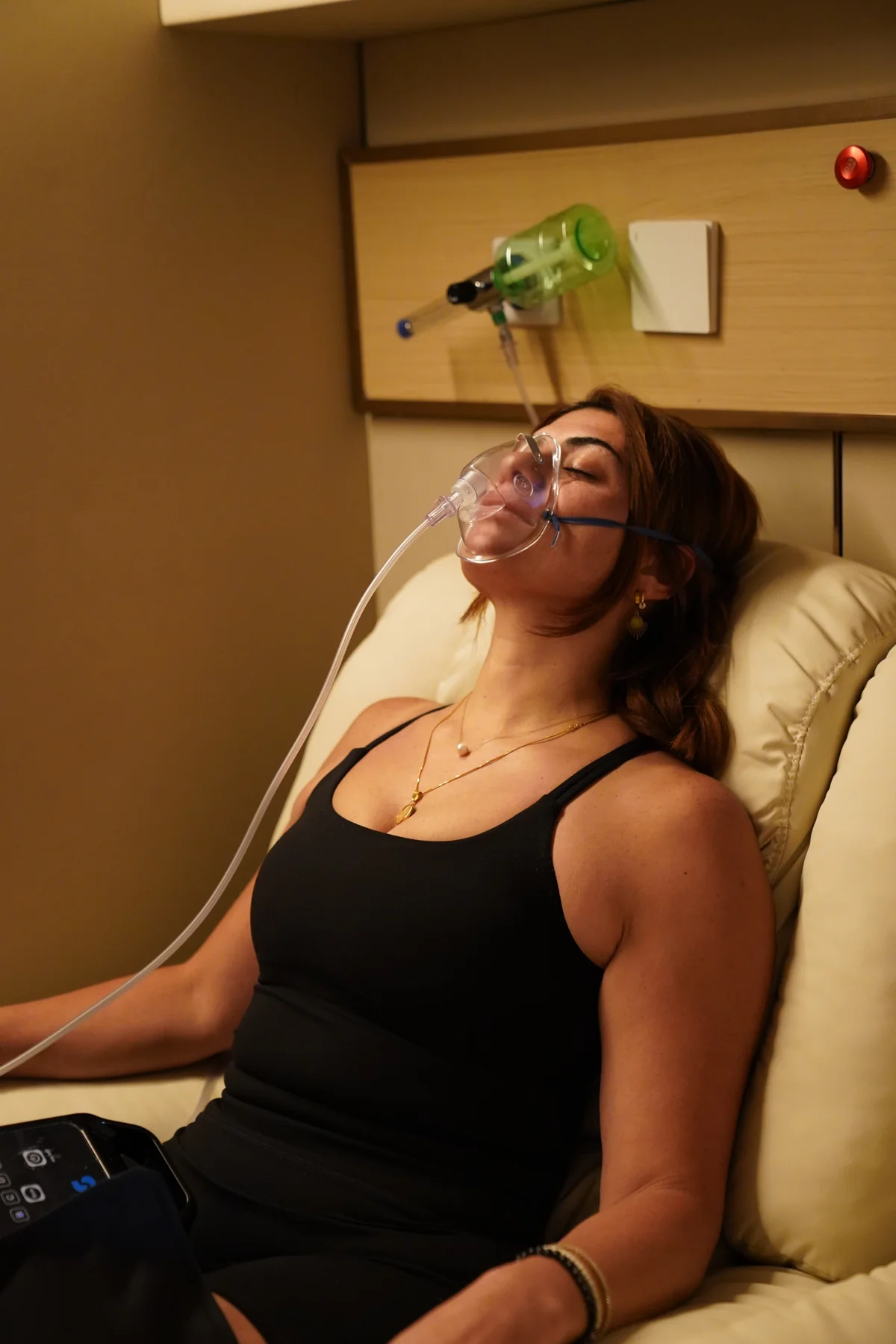
At My BioHealth, hyperbaric oxygen sessions offer dedicated time to step back and explore oxygen therapy as part of your wellness routine. Settle into our seated chamber, breathe oxygen through a provided mask and let our team guide you through the experience.
Choose a 30-, 60- or 90-minute session at our nurse-led clinic in Melbourne’s north.
Prices & appointment timesPreparation & screening
What would you like to work towards?
Exploring oxygen therapy for your routine
Tell us what recovery means to you and what you hope to change. The team can explain the appointment and evidence without promising improved energy, performance or healing.
Questions after surgery or a hair transplant
Speak to your treating surgeon first. Hospital HBOT research cannot establish the benefits of this clinic’s mild-pressure sessions for surgical healing or graft survival.
YOUR APPOINTMENT
Options, pricing & booking
GET TO KNOW YOUR TREATMENT
Recovery, wellbeing and your visit
How HBOT works and why people explore it
At My BioHealth, you remain seated in a chamber while breathing oxygen through a provided mask. The chamber gradually reaches 1.35 ATA—approximately 35% higher than normal air pressure at sea level.
Why does the pressure matter?
HBOT combines increased air pressure with oxygen delivered through a mask. Together, these can increase the amount of oxygen dissolved in the liquid part of your blood, called plasma. The pressure is therefore one part of the oxygen-delivery process.
The 1.35 ATA setting describes pressure, not 35% more oxygen. The oxygen concentration you breathe, session length and treatment protocol also matter.
Why people explore HBOT
Perhaps you want to understand your options for exercise recovery, are curious about healthy ageing, or have questions about oxygen, sleep and wellbeing. Start with what matters to you, and our team can explain how the session works and what the research can—and cannot—tell us.
Different chambers and treatment protocols are not interchangeable. Our 1.35 ATA wellness sessions should not be expected to reproduce results from higher-pressure medical treatment.
Recovery and active living
Recovery matters whether you train regularly or simply want to keep up with everyday life. Researchers have investigated HBOT for exercise recovery and performance, although findings are mixed and depend on the protocol. Our team can explain the session and discuss how it might fit into your existing routine—without promising faster healing or improved athletic performance. View the exercise recovery review.
Sleep, rest and wellbeing
Sleep is often part of the conversation when people explore recovery. Research has examined sleep quality following HBOT treatment courses, with some encouraging findings. That does not establish our sessions as a treatment for insomnia or sleep apnoea. If sleep difficulties are ongoing, medical assessment remains important. View the sleep-quality study.
Healthy ageing and longevity
Interest in HBOT and anti-ageing comes from studies investigating cellular ageing and cognitive function. This is an evolving field, not proof that a wellness session reverses ageing or extends life. For a clearer explanation of the findings, explore our guide to understanding HBOT.
Wound healing: a medical application
Specialist medical HBOT is used alongside standard care for selected difficult-to-heal wounds. This is different from the mild-pressure service offered at My BioHealth. If you have a wound, recent surgery or a healing concern, speak with your treating clinician about the appropriate care before booking. View The Alfred’s medical HBOT information.
What can you realistically expect?
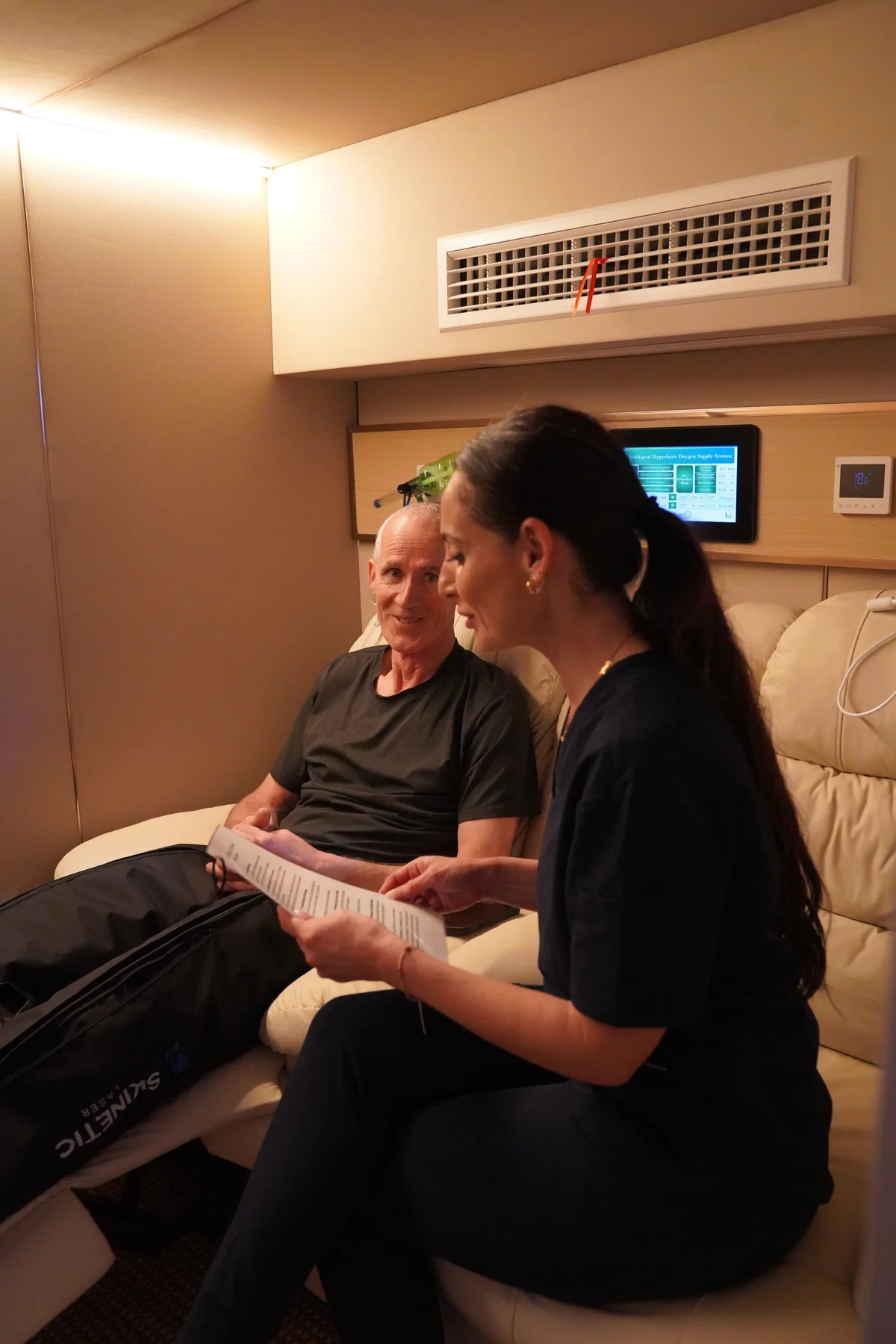
Your first visit includes suitability screening and time to ask questions. During the session, you remain seated while breathing oxygen through the mask. Individual responses vary, and a single visit cannot tell you whether a particular result will follow. We can discuss session options and the limits of the evidence before you decide whether to book again.
Your appointment, explained
Before you begin
For your first visit, arrive 10 minutes early. We review your health information, check suitability and explain the chamber experience, including how to equalise your ears.
During your session
You remain seated while the chamber gradually reaches 1.35 ATA—approximately 35% above normal sea-level atmospheric pressure. You may notice pressure in your ears, similar to being on an aircraft. Tell the team if you experience discomfort. Once the operating pressure is reached, sit back and rest while breathing oxygen through your mask.
Before you leave
The pressure gradually returns to normal. Our team checks how you are feeling and answers any questions about your experience or future appointments.
Choose the visit that suits you
Start with a single appointment or explore the packages shown in our pricing cards. There is no requirement to commit to a course before trying the service.
Our chamber accommodates up to two people. Contact us to arrange a shared appointment; published prices are per person.
Five-session packages expire three months from purchase and ten-session packages expire six months from purchase. Packages are for the purchaser only. Selected memberships also include HBOT appointments or member pricing.
Recovery Boots can be added for $39 for the duration of the HBOT booking, where suitable.
Prepare for your visit
Wear comfortable cotton clothing and avoid applying lotions, oils, perfume or hair products before your session. Follow our instructions about items permitted inside the chamber.
Contact us beforehand if you have blocked ears, sinus congestion, recent surgery, are pregnant, take medicines or have health concerns. Screening is completed before your first session, and medical clearance may be required.
Tell us about current respiratory illness, chemotherapy, ear or sinus surgery, a seizure disorder or significant claustrophobia. An untreated pneumothorax (collapsed lung) is a reason not to enter the chamber; medical assessment is required. This is not a complete screening list.
Contact us before booking for a child or teenager. My BioHealth is not an NDIS-registered provider; confirm individual funding eligibility before booking. We can provide invoices and receipts.
HBOT close to home
Visit My BioHealth at Unit 3, 11–13 Thompson Street, Campbellfield.
Our clinic welcomes clients from Campbellfield, Broadmeadows, Fawkner, Glenroy, Hadfield and surrounding northern Melbourne suburbs. All appointments are booked in advance.
Frequently asked questions
Can I book directly?
Yes. Choose your appointment online. Your first-visit screening takes place before the session begins. Contact us first if you have medical concerns or recent surgery.
Which session length should I choose?
Choose 30, 60 or 90 minutes according to your schedule and preferences, or ask our team for guidance. The complete appointment includes additional time, as shown in the pricing cards. Longer does not automatically mean better.
How often should I attend?
There is no universal schedule. Frequency depends on your goals, suitability and tolerance. You can begin with one appointment before considering ongoing visits.
Will I notice a difference after one session?
Individual responses vary. A first visit introduces you to the experience, but an immediate change or particular health benefit cannot be guaranteed.
Is this the same as hospital HBOT?
No. My BioHealth offers mild-pressure wellness sessions. If your doctor has prescribed medical hyperbaric treatment, ask them which facility and protocol you need.
Considering HBOT around a hair treatment?
If you are researching HBOT alongside PRP, PRF or care after a hair transplant, read our guide before arranging a combined appointment. Suitability, timing and costs need individual discussion. A combined appointment does not imply a proven improvement in hair-treatment results.
Ready to explore HBOT?
Book your preferred appointment or contact our team if you would like to understand the experience first.
Book HBOT · Call 0430 077 330 · WhatsApp Our Team
Individual responses and outcomes vary. Our wellness sessions do not replace medical advice, prescribed treatment or specialist wound care.
Questions about your goals
Can I choose HBOT to speed recovery after surgery?
Do not assume a mild-pressure wellness session will speed surgical recovery. Follow your surgeon’s aftercare and ask them whether additional treatment is appropriate. Medical HBOT uses different protocols and indications from this clinic’s service.
Search treatments & articles
Browse the links below. Typing search becomes available when this viewer allows scripts.
- Eyebrow Tattoo Removal in Campbellfield, MelbourneClinic information
- Private Infrared Sauna in Campbellfield, MelbourneTreatment
- Wellness & Recovery MembershipsClinic information
- Privacy PolicyClinic information
- Photobiomodulation ExplainedArticle
- Wellness, Recovery, Skin & Hair in Melbourne’s NorthClinic information
- Pelvic Floor EMS Chair Sessions in Campbellfield for Women and MenTreatment
- Full-Body Red Light Therapy in Campbellfield, MelbourneTreatment
- The Knowledge HubClinic information
- Skin & Hair FAQsClinic information
- Red Light Therapy for Skin in Campbellfield, MelbourneTreatment
- Magnesium Float Therapy in Campbellfield, MelbourneTreatment
- PRP & PRF Skin and Under-Eye Treatments in MelbourneTreatment
- Contact & Visit My BioHealthClinic information
- IV Therapy and InfusionsClinic information
- BioRePeel in Campbellfield, MelbourneTreatment
- HBOT Before PRP & PRF Hair TreatmentsArticle
- Fractional CO₂ Laser Skin Resurfacing in CampbellfieldTreatment
- Hyperbaric Oxygen Therapy (HBOT) in CampbellfieldTreatment
- Wellness, Recovery, Skin & Hair for CraigieburnClinic information
- Understanding Mitochondria & Cellular EnergyArticle
- Wellness & RecoveryClinic information
- Carbon Laser Facial in CampbellfieldClinic information
- Skin Needling & Microneedling in CampbellfieldTreatment
- PRP, PRF, ACP & ACP MAX ExplainedArticle
- Recovery Boots & Pneumatic Compression in CampbellfieldTreatment
- Hair Thinning vs Hair Shedding: What’s the Difference?Article
- Explore Your Skin OptionsClinic information
- Terms & ConditionsClinic information
- Your Recovery BlueprintClinic information
- PRP & PRF Hair Treatments in Campbellfield, MelbourneTreatment
- Understanding the EvidenceClinic information
- Skin, Hair & Regenerative TreatmentsClinic information
- Skin & HairClinic information
- Wellness & Recovery FAQsClinic information
- Hyperbaric Oxygen Therapy: What the Evidence ShowsArticle
- Functional Biomarker PanelClinic information
- Wellness, Recovery, Skin & Hair for Roxburgh ParkClinic information
- Advanced Treatment Options for Skin, Under-Eyes and HairTreatment
- Contact & Visit My BioHealthClinic information
- Wellness, Recovery, Skin & Hair for BroadmeadowsClinic information
- Pelvic Floor Health at Every Life StageArticle
- Laser Tattoo Removal in CampbellfieldTreatment
- Book your My BioHealth visitClinic information
- Book Skin & HairClinic information
- Wellness & Recovery Client ExperiencesClinic information
- Skin & Hair Client ExperiencesClinic information